Updated on June 26, 2026 by

Northeast Ohio gets hit hard by hail. Columbus alone saw 107 hail events in the past year. Akron’s 2012 storm dropped tennis ball-sized hail that caused $5 million in damage.
The problem is that hail damage doesn’t always announce itself. Your roof can take a beating and look fine from the ground. Weeks or months later, leaks start. By then, your insurance claim window may have closed.
At Always Be Fair Roofing, we help Northeast Ohio homeowners identify storm damage early and document it properly. This guide walks you through what hail damage actually looks like, what you need to record, and when you need professional help.
Key Takeaways
- Hail as small as 1 inch can damage asphalt shingles by knocking off protective granules
- Check from the ground first – dented gutters and vents signal roof impact
- Random damage patterns indicate hail, while consistent wear suggests aging
- Document within days – insurance carriers want claims within two years, but evidence fades fast
- Hidden damage develops slowly – minor impacts strip UV protection and accelerate failure
- Professional documentation carries more weight with insurance companies than homeowner photos alone
What Hail Damage Looks Like on Your Roof
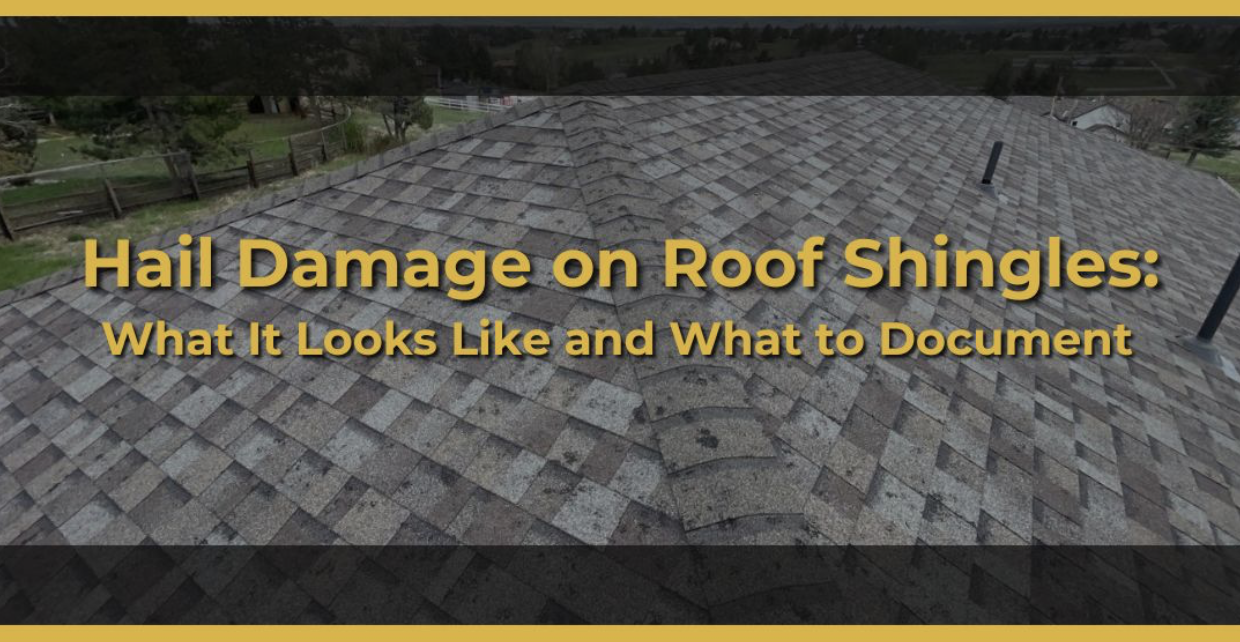
Hail damage shows up differently depending on the size of the hailstones and the age of your roof.
Size Matters
Quarter-sized hail (1 inch) can bruise shingles and knock off granules, especially on older roofs. Hail between 1 and 1.5 inches creates visible divots where granules get stripped away, exposing the mat underneath. Baseball-sized hail (2.75 inches) falls at nearly 100 mph and destroys most roofing materials on impact.
Visual Markers to Look For
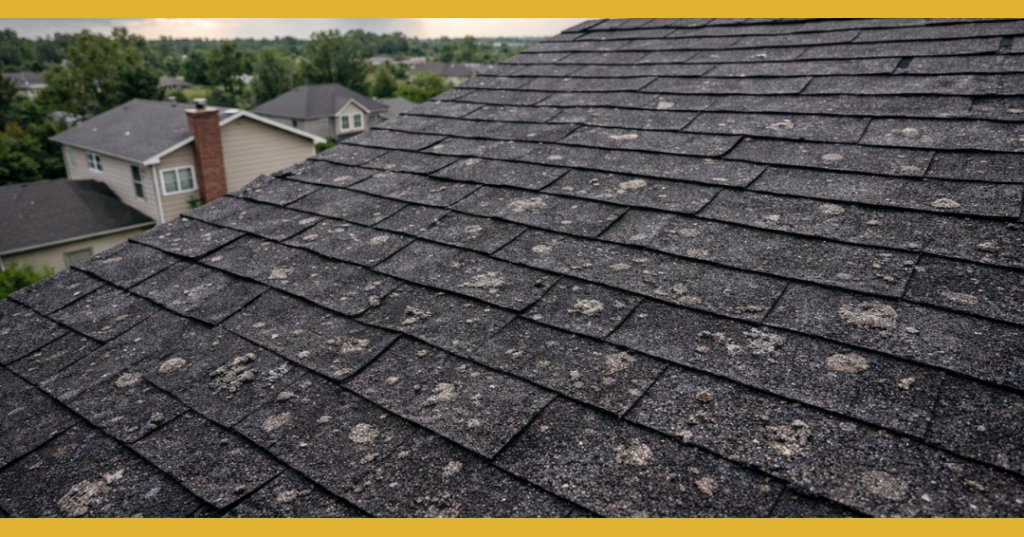
Black divots or soft spots that feel like bruises on an apple indicate impact damage. The asphalt underneath looks shiny where granules are missing. These spots lose their UV protection and age faster than the rest of your roof.
Random patterns across the roof signal hail damage. Wind damage hits specific areas. Normal aging looks consistent. Hail hits wherever it lands, creating scattered impact points.
Exposed fiberglass mat means the protective layers are gone. Water can penetrate these areas, and the damage spreads outward over time.
The Hidden Damage Problem
Hail damage often develops quietly. Minor impacts strip away granules that shield shingles from UV rays. The damage accelerates aging. Leaks can appear weeks or months after a storm because the initial damage gradually worsens with heat and expansion.
What looks like minor dents can lead to significant problems. The roof doesn’t fail immediately. It fails slowly, and by the time you notice water stains on your ceiling, the damage has spread.
Ground-Level Safety Check: What You Can See Without Climbing

Climbing onto your roof after a storm is dangerous. Start with a ground-level inspection.
Check These Areas First
- Gutters and downspouts – Dents here are the easiest indicator of roof impact
- Roof vents – Dents in metal vents or cracks in plastic vents mean heavy hail hit your roof
- Window sills and casings – Impact marks give you information about hail size and density
- Siding – Dents or chips indicate the storm had enough force to damage your roof
- AC unit housing – Metal dents show impact severity
Use binoculars to inspect your roof from the ground. Look for dark spots, missing shingles, or areas where the color looks different. If you see collateral damage to the gutters and vents, your roof likely took hits, too.
What to Document For Hail Damage
Insurance carriers process thousands of storm claims. Clear documentation separates approved claims from denied ones.
Take These Photos
- Date-stamped images of all damaged areas from multiple angles
- Close-ups of impact points showing granule loss and divots
- Wide shots of the entire roof to show damage distribution
- Collateral damage – gutters, vents, siding, windows
- Reference objects – place a coin or ruler next to the damage for scale
Record This Information
- Storm date and time – check local weather reports for official records
- Hail size – National Weather Service reports provide this data
- Roof age and material type – your insurance company will ask
- Previous maintenance records – shows you maintained the roof properly
- When you first noticed damage– establishes timeline
Professional documentation carries more weight than homeowner photos. Inspectors use moisture meters and infrared cameras to detect hidden damage. They know what insurance adjusters look for and document accordingly.
What Can Be Left Alone vs. What Needs Fixing
Not all hail damage requires immediate replacement. Understanding the difference saves you money and protects your home.
Minor Damage You Can Monitor
- Light granule loss on a newer roof (less than 10 years old) with no exposed mat
- Cosmetic dents on metal flashing that don’t compromise the seal
- Single isolated impacts that can be repaired without full replacement
Even minor damage should be documented. It establishes a baseline if future storms cause additional problems.
Damage That Requires Repair
- Exposed fiberglass mat in multiple locations
- Cracked or broken shingles that allow water penetration
- Damaged flashing or vents that compromise waterproofing
- Widespread granule loss across large sections
When Full Replacement Is Necessary
Replace your roof when damage is widespread enough that repairs won’t restore proper protection. Insurance companies typically approve replacement when:
- Impact damage covers more than 30-40% of the roof
- Multiple shingles show exposed mat or cracking
- The roof is older and already showing wear – hail accelerates existing problems
- Structural damage affects the decking or support
Older roofs with compromised materials sustain damage at smaller hail sizes than newer roofs. Age affects both the damage severity and insurance coverage. Some carriers switch from replacement cost to actual cash value on older roofs, paying less for the same damage.
Hail Damage Insurance Claims: What You Need to Know
Hail damage causes an estimated $10 billion in property damage nationwide each year. Wind and hail claims account for about 34% of all homeowners’ insurance claims.
Timeline Matters
Most insurance carriers want claims filed within two years of a storm. File as soon as you identify damage. Evidence fades over time, and new weather events can complicate the claim by mixing old damage with new.
The Claims Process
Report the claim immediately. Your insurance company will schedule an adjuster inspection. The adjuster assesses damage and determines coverage.
Get your own inspection. Insurance adjusters work for the insurance company. A professional roofing inspection gives you independent documentation of all damage, including issues the adjuster might miss.
Understand your coverage. Replacement cost coverage pays for a new roof. Actual cash value coverage deducts depreciation based on age. Know which you have before the claim starts.
Don’t sign anything until you understand the scope. Some contractors push quick signatures. Take time to review what’s covered and what’s not.
Local Contractors vs. Storm Chasers
Out-of-town crews appear after major storms. They disappear just as fast. A local contractor stays available when you need follow-up work or warranty service.
Local expertise matters for insurance claims, too. Contractors familiar with Northeast Ohio weather patterns, regional regulations, and county-specific claim processes navigate the system faster and more accurately.
Frequently Asked Questions
How soon after a storm should I inspect my roof?
Inspect within a few days while the evidence is fresh. Document everything, even if the damage seems minor.
Can I file a claim if I’m not sure there’s damage?
Yes. Filing a claim doesn’t commit you to repairs. Get a professional inspection to determine if damage exists.
Will my insurance rates go up if I file a hail damage claim?
Weather-related claims typically don’t increase rates the same way at-fault claims do, but policies vary. Check with your insurance provider.
How long does a hail damage claim take?
Simple claims resolve in 2-4 weeks. Complex claims involving disputes or additional damage can take months.
What if the insurance adjuster finds less damage than my contractor?
This happens often. Your contractor can provide supplemental documentation and work with the adjuster to resolve differences.
Get an Eyes-On Inspection
Hail damage hides. What looks fine from the ground can be failing underneath. By the time leaks appear, you’ve lost time on your insurance claim, and the damage has spread.
Always Be Fair Roofing provides thorough “Eyes On” inspections that identify all storm damage, document it properly, and help you navigate the insurance process. We serve Akron, Canton, and surrounding Northeast Ohio communities with honest assessments and clear options.
We don’t push unnecessary replacements. We show you what’s damaged, explain what needs fixing, and give you the documentation to support your claim.
Schedule your inspection today. Call 330-818-0203 or contact us online. We’ll assess your roof, document any damage, and walk you through your options.
When storms hit Northeast Ohio, you need a local team that stays available. Get the inspection done right the first time.