Updated on July 14, 2026 by

A hailstorm can damage your roof significantly, even when the damage is not obvious from the ground. If you live in Northeast Ohio, understanding how the insurance claims process works and what your rights are can be the difference between a full roof replacement and a check that barely covers three shingles.
This guide walks you through what hail damage actually looks like, what Ohio law requires of your insurance company, and how to protect yourself if your claim gets underpaid or denied.
Key Takeaways
- Hail damage is not always visible from the ground. A professional inspection is the most reliable way to document what actually happened to your roof.
- Ohio law includes a matching requirement, meaning your insurer must replace enough of your roof to create a reasonably comparable appearance, not just patch the damaged area.
- Shingles that are discontinued or no longer available may entitle you to a full roof replacement under Ohio’s matching standards.
- A full claim approval does not guarantee a full payout. Deductibles, actual cash value coverage, and roof payment schedules can significantly reduce what you actually receive.
- You have the right to appeal a claim decision. Most policies give you 30 to 90 days from the denial date to file a formal appeal.
- A roofing contractor experienced in insurance claims can document damage thoroughly and help you communicate with your adjuster, without charging you upfront.
What Hail Damage Actually Looks Like
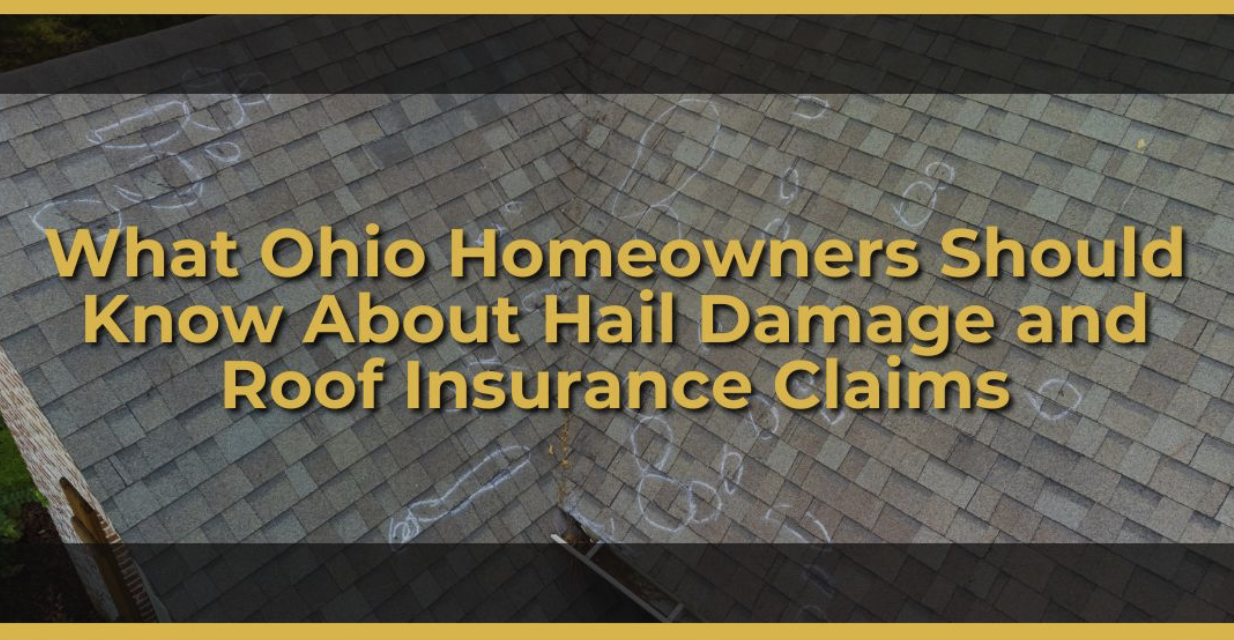
Not every hailstorm causes roof damage, and a good roofing professional starts by confirming whether a true “event” occurred before looking for anything else. Small, soft hail generally will not harm a roof. A qualifying event typically means hail at least an inch in diameter, hard rather than soft, and driven by wind rather than falling straight down. If your area experienced hail like that, you will usually know it. Once an event is confirmed, the next step is checking for damage to the roof itself, along with siding, soft metals like gutters, windows, and other exterior surfaces, before ever discussing a claim.
Not all of that damage is obvious. Large hail leaves visible dents and cracks. Smaller hail, even hail as small as an inch in diameter, can fracture the granule layer on asphalt shingles without leaving a visible dent. That granule loss weakens the shingle, accelerates aging, and creates entry points for water.
When an experienced roofer inspects your roof after a storm, they look for circular impact marks, bruising in the shingle mat, granule loss in impact patterns, and damage to soft metals like gutters, vents, and flashing. These details matter because insurance adjusters use the same checklist. If your contractor can identify and document the same evidence, your claim stands on much stronger ground.
Hail does not hit a roof evenly. Storm direction, pitch, and surrounding trees all affect where damage concentrates. A proper inspection covers every slope, not just the most visible one.
Ohio’s Matching Requirement and Why It Matters
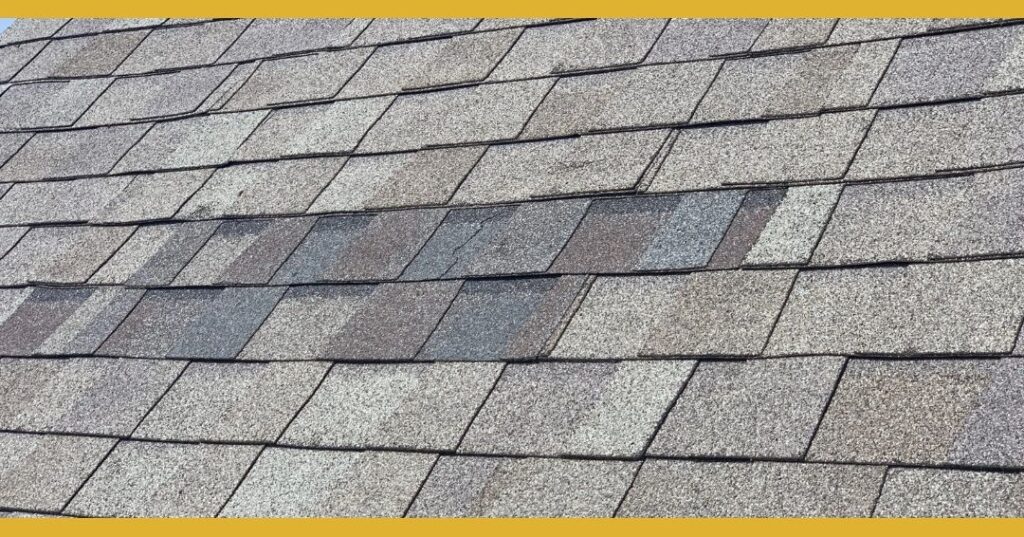
Here is something many Ohio homeowners do not know: your insurance company cannot simply patch a few shingles and call it done if the new material does not match the rest of your roof.
Ohio Administrative Code Rule 3901-1-54 states that when an exterior loss requires replacement of an item and the replaced item does not match the quality, color, or size of the item suffering the loss, the insurer must replace as much of the item as needed to result in a reasonably comparable appearance. That standard is not just cosmetic. It is the law.
This becomes especially important when your shingles are older or when the manufacturer has discontinued the product. If the shingles on your roof are no longer being made, no patch is going to match, and a patch-only settlement may not be legally sufficient. A roofing contractor who works regularly with insurance claims will know how to document this and communicate it clearly to your adjuster.
Full Approval Does Not Always Mean Full Payment
Getting your claim approved is good news, but approval and payout are not the same thing. Depending on your policy, a fully approved claim can still leave you with very little money in hand, or none at all.
Most policies include a deductible calculated as a percentage of your home’s value rather than a flat dollar amount. On many Ohio homes, a one percent deductible works out to $3,000 to $10,000 that comes out of your claim before you ever see a check. Some policies also carry actual cash value coverage instead of replacement cost coverage, which subtracts depreciation on top of the deductible. A roof payment schedule, if your policy includes one, can reduce the payout further still.
It is entirely possible to have a claim approved for several thousand dollars in damage and receive close to nothing after the deductible and depreciation are applied. That is not a sign that something went wrong with your claim. It is a reflection of your specific policy terms, which is exactly why reading your policy and understanding your coverage type matters just as much as documenting the damage itself.
What to Do After a Hail Storm
Move through these steps in order. Do not wait.
- Get a professional inspection as soon as possible. Hail damage worsens over time. Water gets under compromised shingles. Waiting also gives insurers reason to question whether your damage is storm-related or the result of deferred maintenance. Call a local roofer you trust within days of the storm, not weeks.
- Document everything before any repair work begins. Photograph and video the roof, the gutters, the vents, the siding, and any interior water damage you can see. Date your photos. Keep a written log of every conversation with your insurance company, including the date, who you spoke with, and what was said.
- Read your policy. Know what perils are covered, what your deductible is, and whether you have replacement cost value coverage or actual cash value coverage. The difference matters. Replacement cost value pays to replace your roof at today’s prices. Actual cash value subtracts depreciation first.
- File your claim promptly. Most policies have a deadline for reporting storm damage. Do not assume you have unlimited time.
- Request a formal appeal if your claim is denied or underpaid. This is your right. Submit the appeal in writing, include your supporting documentation, and check your denial letter for the specific deadline. You typically have 30 to 90 days.
Working With a Contractor Who Knows the Claims Process
The adjuster your insurance company sends works for the insurance company. Their job is to assess the damage according to policy terms, which may not always align with what your roof actually needs.
A contractor experienced in storm damage and insurance claims brings a different perspective. They document the damage in the same language adjusters use, know how to flag matching issues, and can help you understand whether a repair scope is genuinely sufficient or whether a full replacement is warranted.
Filing a claim without professional guidance first is a bigger gamble than many homeowners realize. Getting a full approval and then hiring a contractor to do the work for less is no longer the opportunity it once was. Insurance carriers know precisely what a proper repair or replacement costs, and if the estimate is written correctly, the only way to do the job for meaningfully less is to cut corners: inferior materials, a reduced scope of work, or craftsmanship that will not hold up over time.
This is one of the biggest reasons to involve an experienced roofing contractor before you file, not after. At Always Be Fair Roofing, our recommendation on whether to file or not carries an approval rate we take real pride in, consistently well above 99 percent. We know when the damage supports a claim, and just as importantly, we know when it does not. That guidance protects you from filing prematurely and from having to come back later, unhappy with how someone else’s advice played out.
At Always Be Fair Roofing, we have built our business around exactly this kind of transparency. We do not pressure homeowners into claims they do not need. We also do not let homeowners walk away with less than they are owed. We inspect, explain what we found, and give you a clear next step with no obligation.
We have helped hundreds of Northeast Ohio homeowners navigate the claims process with thorough documentation and clear communication.
Frequently Asked Questions
Does hail always cause enough damage to file an insurance claim?
Not always, but it often does more damage than it appears to from the ground. Small hail can crack the granule layer on asphalt shingles without leaving obvious dents. The only reliable way to know is a professional inspection. If significant granule loss or impact bruising is present, you likely have a legitimate claim. Filing a claim that is later denied does not penalize you in Ohio.
What if my insurance company only wants to repair part of my roof?
Ohio Administrative Code Rule 3901-1-54 requires insurers to ensure repaired areas reasonably match the rest of your roof in quality, color, and size. If your shingles are discontinued or no longer available, a partial repair may not satisfy that standard. Document the mismatch clearly, get a written statement from your contractor, and file a formal appeal if the proposed repair does not create a comparable appearance.
Does a full claim approval mean I’ll get a full payout?
Not necessarily. Deductibles calculated as a percentage of your home’s value, actual cash value coverage, and roof payment schedules can all reduce your final payout, sometimes to very little. Understanding your specific policy terms before you file helps set realistic expectations about what an approval will actually mean for your wallet.
How long do I have to file a hail damage claim in Ohio?
Most homeowners insurance policies require you to report storm damage promptly, often within one year of the storm event, though specific deadlines vary by policy. Do not wait to inspect and document. The sooner damage is identified and reported, the harder it is for an insurer to attribute the condition to age or pre-existing wear.
Can a roofing contractor help with my insurance claim?
Yes. A contractor experienced in storm damage can document the damage in the same technical terms adjusters use, identify issues like matching failures or discontinued shingles, and walk alongside you through the claims process. They cannot act as a public adjuster, but their documentation and expertise are valuable in supporting your claim.
Your Roof Deserves a Fair Assessment
Hail damage claims in Ohio do not have to be confusing or contentious. The process works best when you move quickly, document thoroughly, and work with a contractor who knows what to look for and how to communicate it.
If you have recently experienced a storm or want a professional inspection before filing a claim, the team at Always Be Fair Roofing is ready to help. Call us at (330) 818-0203 or contact us here to schedule a free, no-obligation inspection. No pressure. No surprises. Just a straight answer about your roof.