Updated on November 17, 2026 by
Is wind damage covered by insurance? Usually yes, if you can tie the damage to a specific storm and a strong enough wind speed, not just years of normal aging. The hard part is telling the two apart before you ever call anyone.
A few missing shingles or a lifted ridge cap after a windstorm can look almost identical to ordinary wear and tear, especially from the ground. That matters, because insurers do not cover gradual aging. They cover sudden, storm-caused damage. This article walks you through what each one actually looks like, what determines whether your insurance will pay, and what to do before you file a claim.
One thing many homeowners don’t realize: shingles don’t just come off a roof on their own. It takes an event. Wear and tear can lower how strong or severe that event needs to be to do damage, but the cause is still wind, and wind is a covered peril.
Key Takeaways
- Wind damage usually follows a directional pattern across the roof. Normal wear and tear shows up scattered and gradual instead.
- Shingles on a healthy roof typically start blowing off somewhere around 60 to 80 mph of sustained wind, according to the National Weather Service. An older roof can lose shingles in weaker wind, but the cause is still the storm.
- Insurers look for a documented storm date and wind speed, not just visible damage on your roof.
- A clear damage pattern tied to a known storm event is what separates a covered claim from a denied one.
- A free inspection can tell you which category your roof falls into before you file anything with your insurer.
What Wind Damage Actually Looks Like on a Roof
Wind damage tends to follow a pattern. Look for shingles that are lifted, creased, or missing in one direction across a section of the roof, usually the side that faced the storm. You might also notice exposed nail lines where a shingle has pulled partway loose, or a crease near the top of the exposed shingle (the middle of the full shingle) where wind got underneath it and bent it back.
Sometimes wind peels a shingle back without fully removing it, leaving a visible gap or a flapping edge after the storm passes. Other times it tears a shingle loose completely, leaving bare decking exposed in a strip or cluster. Either way, the damage tends to cluster where the wind hit hardest, not spread evenly across the whole roof.
This is different from hail damage, which shows up as small, random dents or bruises across the shingle surface instead of a directional pattern. If a recent storm brought hail along with the wind, check out our article about Hail Damage and Roof Insurance Claims.
What Normal Wear and Tear Looks Like Instead
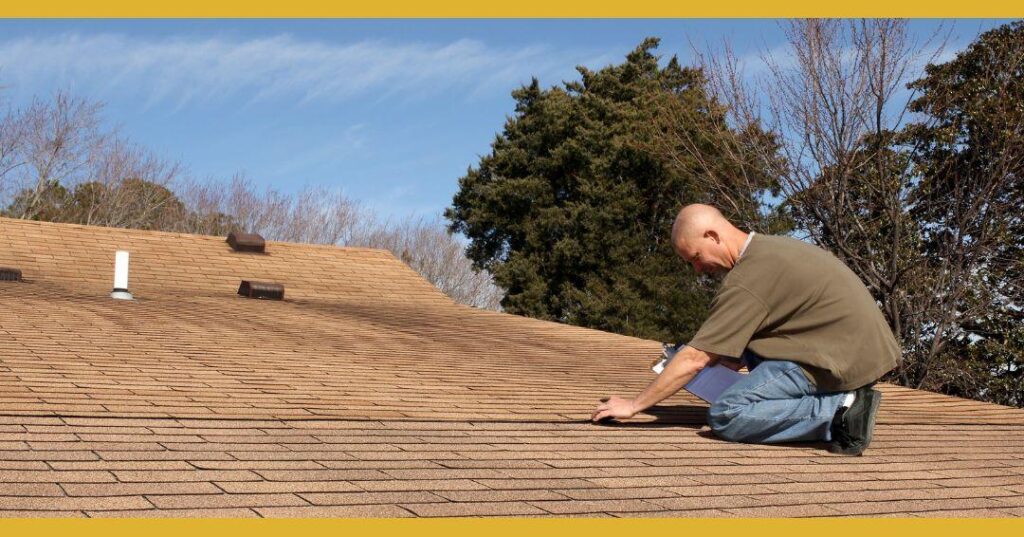
Wear and tear builds up slowly, and it rarely has a pattern tied to one event. You will usually see granule loss spread evenly across the whole roof instead of clustered on one side. Shingle edges may curl or cup upward from years of sun and heat, not from a single storm.
If your roof is older, a lifted edge here or there might simply be age catching up with the materials, not storm damage. That distinction matters because insurance does not pay for aging on its own. But age does not cancel out a storm. If wind pulls shingles off an older roof, the cause is still wind, and that is a covered peril. Worn materials may simply mean it took a weaker storm to do the damage.
A roof nearing the end of its expected lifespan is also more likely to show both at once: some ordinary wear, plus genuine wind damage layered on top of it after a storm. An inspector trained to separate the two will tell you honestly which parts of the damage are new and which were already there.
What Determines Insurance Eligibility
Two things matter most to an insurer: the storm itself, and the pattern of damage on your roof.
According to the National Weather Service, shingles typically begin blowing off houses once winds reach somewhere around 60 to 80 mph. That range applies to roofs in good condition. An older or worn roof can lose shingles at lower wind speeds, and that is still wind damage. Either way, a storm on a specific date is the kind of documented event insurers look for. Pair that with a damage pattern that actually matches wind, not general aging, and you have the two pieces a claim needs to hold up.
This is also where many homeowners get stuck. You can usually find the general weather conditions for your date after the fact, but matching that to what your own roof actually looks like takes a trained eye. That’s something ABF owner Brian Roach has spent more than 35 years doing, working on both the insurance side and the construction side of roof claims. An adjuster is looking for the same two things: a storm strong enough to cause the damage, and a pattern on the roof that matches it. If either piece is missing or unclear, a claim can get denied or scaled back. That does not mean the damage is fake. It means it cannot be tied cleanly to a covered event.
What to Do Before You Call Anyone
Before you reach out to your insurance company, take a few simple steps:
- Note the date of the storm. You will need this to connect the damage to a specific weather event. If you are not sure of the exact date, your local weather history or a neighbor’s account of the same storm can help narrow it down.
- Document what you can see safely from the ground. Photos of missing shingles, visible lifting, or debris in the yard all help, but never get on the roof yourself to inspect it. A damaged roof is not a safe place to walk, and a fall is a far bigger risk than a delayed phone call.
- Get a professional look before you file. A trained inspector can tell you honestly whether what you are seeing is wind damage or wear and tear. This happens before an insurance claim is even on the table, and that answer, documented with date-stamped photos, is what strengthens a claim if you do decide to file one.
For a broader walkthrough of what to check after a storm, see How to Check Your Home for Damage After a Spring Storm in Northeast Ohio.
FAQ
What should you do if your roof is damaged by wind?
Start by documenting what you can see from the ground, including the date of the storm. Avoid getting on the roof yourself. Then get a professional inspection before you contact your insurer. That way you know whether the damage is likely covered, and you already have clear documentation ready if you do file a claim.
Is wind insurance separate from homeowners insurance?
In most cases, no. Standard homeowners insurance policies include wind damage coverage as part of the policy, rather than as a separate add-on. Some coastal or high-risk areas require a separate wind or hurricane deductible, but that is not typical for most Northeast Ohio homes. Always check your specific policy to confirm.
What type of wind-related damage does home insurance typically not cover?
Home insurance typically will not cover wear and tear or lack of maintenance on their own, such as granule loss, curling shingles, or nail pops. But if a storm pulls shingles off, the cause is wind, even if the roof was already worn. Claims run into trouble when an adjuster decides the damage pattern matches aging, not a specific wind event. Then the claim is likely to be denied or only partially covered.
Will insurance pay to replace siding damaged in the same storm?
Often, yes, if the siding damage can be tied to the same documented storm event and shows a pattern consistent with wind, not prior wear. An inspector looking at your roof after a windstorm should also check your siding for the same reason, since both are commonly affected by the same event.
Getting a Straight Answer Before You File a Claim
The real question is not just whether wind damage is covered. It is whether what happened to your roof actually matches a documented storm, or whether it is everyday wear and tear with no storm behind it. Telling the two apart takes a trained look, not a guess from the ground.
Always Be Fair Roofing offers a free, no-obligation “Eyes On” inspection. It documents exactly what is on your roof with date-stamped photos, before you file anything. You will get a straight answer, even if that answer is that you do not have a claim worth filing. If what we find is wear and tear instead, like nail pops (which are not wind damage), an ABF roof tune-up can take care of those small problems and help maintain your roof. Call (330) 818-0203 or schedule online to get that answer.