Updated on September 21, 2026 by

Key Takeaways:
- Ceiling stains that appear after rain or snow point to roof leaks
- Stains near plumbing fixtures suggest pipe problems
- Track stain growth by drawing a pencil line around the edge and monitoring changes
- Professional inspection identifies the exact source and prevents costly misdiagnosis
- Water damage from gradual leaks typically isn’t covered by insurance
You spot a water stain on your ceiling. The question hits immediately: is this coming from the roof or a pipe?
Getting this right matters. About 1 in 60 insured homes makes a water damage claim each year. The average payout runs $13,954. But here’s the catch: most policies don’t cover gradual leaks or the damage they cause.
At Always Be Fair Roofing, we see homeowners make the same mistake. They assume every ceiling stain means roof replacement. Sometimes it does. Often it doesn’t. Our “Eyes On” Inspection cuts through the guesswork and shows you exactly what’s happening above your head.
Ceiling Stain Location Tells You Where to Look First
Check what’s directly above the stain.
If the stain sits under a bathroom, kitchen, or laundry room, you’re probably looking at a plumbing leak. Pipes run through walls and floors in these areas. When they fail, water follows gravity straight down.
Stains in the center of a room or along exterior walls point to the roof. Water enters through damaged shingles, flashing, or penetrations like vents and chimneys. It travels along the roof decking before dripping through your ceiling, sometimes several feet from where it actually entered.
Timing Reveals the Pattern
When does the stain appear or grow?
Roof leaks follow the weather. If the stain shows up after rain or snow, your roof is letting water in. Plumbing leaks don’t care about precipitation. They happen when you run water, flush toilets, or take showers.
Track this for a week. Note when you see changes. The pattern will point you in the right direction.
The Pencil Test Shows Active Leaks
Here’s a simple way to monitor stain growth:
- Draw a pencil line around the entire edge of the stain
- Write the date next to your line
- Check it every few days
- Note what events happened when the stain grew beyond your line
Did it expand after a rainstorm? Roof leak. Did it grow after someone showered upstairs? Plumbing issue. No change at all? The leak might have already stopped, but you still need to address the damage.
What the Ceiling Stain Looks Like
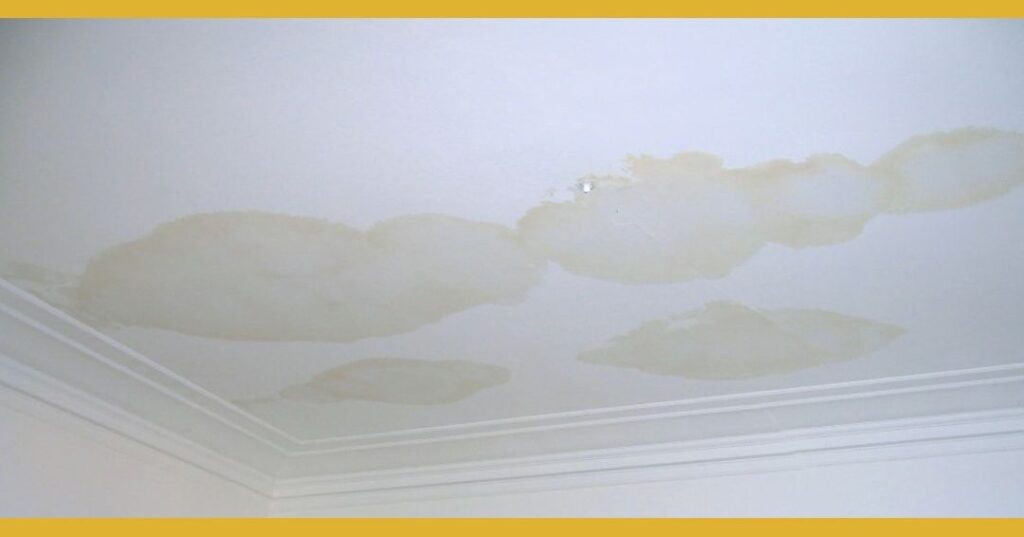
Color and texture provide clues.
Brown or yellow rings typically mean an older leak. The water has been sitting long enough to pull tannins (the pigments that cause the brownish ring) from wood or drywall. Fresh water stains look darker and feel damp to the touch.
Mold appears as black or green spots. In Ohio’s climate with seasonal humidity fluctuations, the EPA warns that mold will grow if wet or damp materials aren’t dried within 24 to 48 hours once moisture seeps into drywall. If you see mold, the leak has been active for a while.
The Water Shutoff Test
Want to rule out plumbing fast?
Turn off your home’s main water supply. Wait a few hours. If the stain stops growing or getting wetter, you’ve got a plumbing leak. If it continues after the next rain, it’s the roof.
This test works best when you can monitor the stain during a rainy period with the water off.
Why Professional Inspection Matters
You can narrow down the source. You can’t always pinpoint it.
Roof leaks are tricky. Water enters at one point and travels before it becomes visible. A stain in your living room might trace back to damaged flashing near your chimney 10 feet away. Professional leak detection costs $150 to $300 and uses moisture meters and infrared cameras to find the exact entry point.
The cost of guessing wrong adds up fast. A damaged flashing that could cost $300 to fix today becomes a $2,500 decking replacement after six months of undetected water intrusion. Insurance won’t cover the gradual damage you could have prevented.
What Insurance Actually Covers
Sudden and accidental damage gets covered. Neglect doesn’t.
If a storm rips shingles off your roof and water pours in, that’s covered. If your roof has been slowly leaking for months because you ignored warning signs, it’s not. The same applies to plumbing. A burst pipe gets covered. A slow drip you didn’t fix doesn’t.
Documentation matters. Take photos of the stain, note when it appeared, and any weather events that occurred around this time. This evidence supports your claim if the damage qualifies for coverage.
Common Roof Leak Entry Points
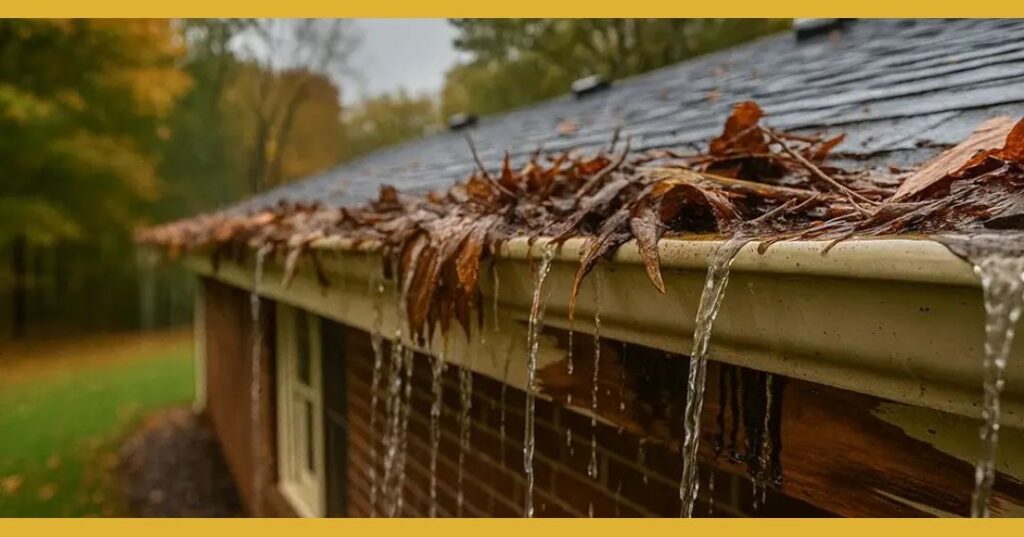
If you’ve determined the leak comes from your roof, these are the usual suspects:
- Damaged or missing shingles – Wind, age, and impact create gaps
- Flashing failures – Metal strips around chimneys, vents, and valleys deteriorate
- Roof penetrations – Vents, skylights, and satellite dishes create weak points
- Ice dams – Water backs up under shingles in Northeast Ohio winters
- Clogged gutters – Water overflows and seeps under the roof edges
If your roof is over 15-20 years old, schedule regular inspections, even if you don’t see active leaks. Materials fail gradually, and catching problems early saves money.
Frequently Asked Questions
Can a ceiling stain appear far from the actual leak source?
Yes. Water travels along the roof decking, rafters, and pipes before dripping through your ceiling. The visible stain can be several feet from where water actually enters.
Should I wait to see if the stain gets worse before calling someone?
No. Even small leaks cause hidden damage to insulation, framing, and electrical systems. The longer you wait, the more expensive repairs become.
Will my insurance cover the ceiling repair if I have a roof leak?
It depends. Insurance typically covers sudden, accidental damage, but not gradual deterioration from lack of maintenance. Document everything and file claims promptly.
How long does it take for a water stain to dry out?
Drying time varies based on humidity, ventilation, and the amount of water that entered. Surface stains might dry in days, but hidden moisture in insulation or framing can linger for weeks.
Get Clear Answers with an “Eyes On” Inspection
Ceiling stains don’t fix themselves. They grow. They spread. They turn into bigger problems.
Always Be Fair Roofing serves homeowners across Akron, Canton, and Northeast Ohio with honest inspections that show you exactly what’s happening. We document the source, explain your options, and help you navigate insurance claims when storm damage applies.
You don’t need to guess whether it’s your roof or your pipes. You need someone who knows how to find out.
Schedule your “Eyes On” Inspection today. Call 330-818-0203 or contact us online. We’ll show you what’s causing the stain and what it takes to fix it right.