
 Updated on June 8, 2026 by

When you see icicles hanging from your roof edge, you’re looking at a warning sign. Those icicles tell you that heat is escaping from your attic and melting snow on your roof.
The water runs down to the cold edge, refreezes, and creates an ice dam.
Here’s what most homeowners get wrong: ice dams are not a roofing problem. They’re a heat management problem. Your roof is doing its job. Your attic insulation and ventilation system are failing.
Why Your Attic Temperature Matters
Your attic should work as a thermal barrier between your warm living space and the cold outside air. It should stay cold in winter.
A properly ventilated attic maintains a temperature within 5 to 10 degrees of the outside air. When your ventilation system fails, attic temperatures climb into the 40s, 50s, or even 60s on cold days.
The warm air in the attic heats the underside of your roof deck. Snow melts, and water flows down to the eaves, where the roof remains cold. Ice forms, and the dam grows.ed 32 degrees while lower surfaces stay below freezing. This requires heat escaping from your house.
You can get ice dams with as little as 1 or 2 inches of snow if your attic is poorly insulated and air-sealed.
The Hidden Problem Most Contractors Won’t Mention
Over 90 percent of homes in the United States have attic ventilation systems that underperform or were installed incorrectly.
Most contractors avoid this conversation. They’ll replace your roof, collect payment, and leave. When ice dams return the next winter, you’re facing the same problem with a new roof.
The real failure happens in your thermal envelope. That’s the boundary between conditioned space and unconditioned space. When warm, moist air from your living space rises into the attic, it contacts the cold underside of the roof deck. This causes condensation to form. In winter, the condensation can turn to frost, and when this frost melts, it creates moisture throughout the attic.
This excess moisture can lead to several problems: wood frames may rot, rafters can weaken, insulation loses its effectiveness, and mold can begin to grow.
How to Spot Ventilation and Insulation Problems
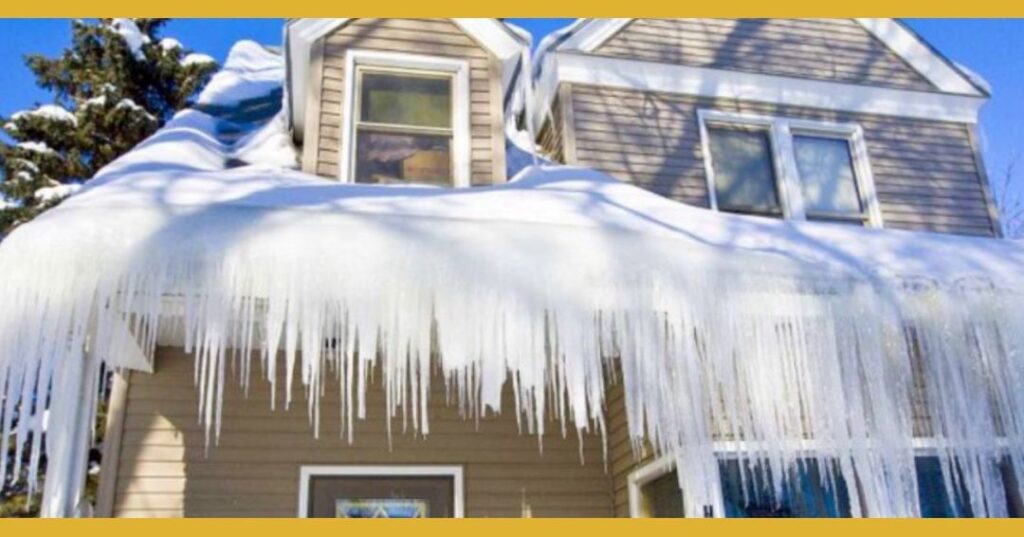
Look for these warning signs:
- Large icicles at the roof edge – Each icicle measures the heat loss from your living space. More icicles mean more heat escaping.
- Ice dams forming after light snowfall – If you see ice buildup with just an inch or two of snow, your attic is losing significant heat.
- Warm spots on your roof – After a snowfall, check if snow melts faster in certain areas. Those warm spots show where heat escapes.
- Frost in your attic – Go up there on a cold day. If you see frost on the underside of your roof deck or on rafters, warm air is getting in.
- Higher energy bills – When heat escapes through your attic, your furnace works harder. You pay more.
- Water stains on ceilings – These often appear near exterior walls or in corners where ice dams force water under shingles.
The Three-Step Fix That Actually Works
Preventing ice dams requires addressing the root cause. You need to keep your attic cold by stopping heat from entering in the first place.
Step 1: Seal All Air Leaks
This is the most important step. Nearly a third of heat loss in the average home occurs through the ceiling into the attic.
Common air leak sources:
• Gaps around electrical wiring
• Recessed can lights
• Plumbing stacks
• Furnace flues and chimneys
• Attic hatches and stairs
• Dropped ceilings
• Open soffits
• Exhaust fan housings
• Top plates
• Ceiling drywall seams
You need to seal these gaps before adding insulation. Otherwise, warm air will flow right through the insulation and into your attic.
Step 2: Add Proper Attic Insulation
For cold climates like Northeast Ohio, your attic insulation should meet an R-value of R-49 to R-60.
This level of insulation prevents heat from escaping into the attic and maintains consistent roof temperatures that resist ice dam formation.
The insulation creates a barrier that keeps your living space warm and your attic cold.
Step 3: Install Balanced Attic Ventilation
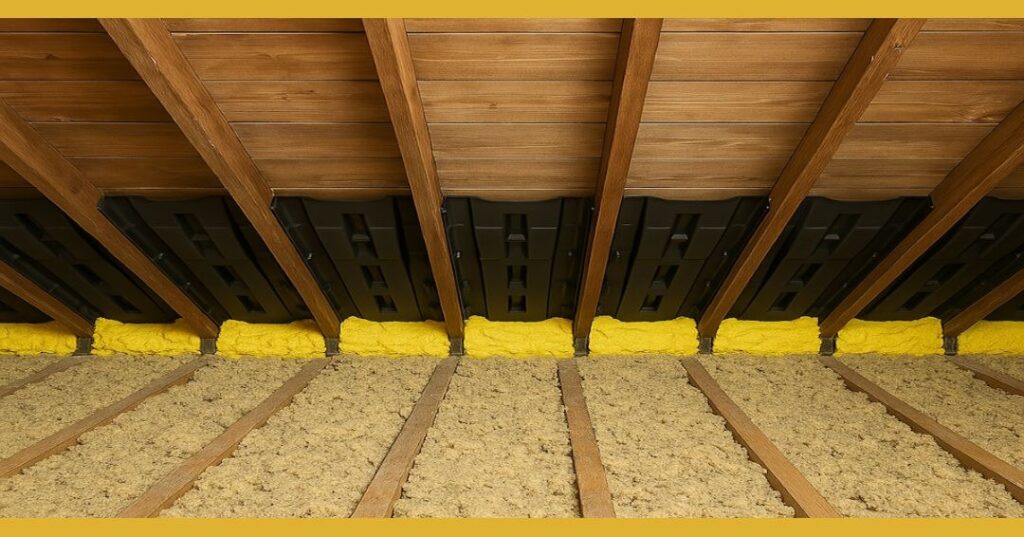
Roof ventilation allows cold outdoor air to flush out any heat that does escape into the attic. This keeps the roof deck near the outside temperature.
A balanced system uses continuous soffit vents for intake and a continuous ridge vent for exhaust. The U.S. Federal Housing Authority recommends a minimum of 1 square foot of attic ventilation for every 300 square feet of attic space, evenly split between intake and exhaust.
Proper ventilation moves super-heated air out in summer, protecting your roof shingles and removing moisture. In winter, it keeps the attic cold to reduce the potential for ice damming.
Why This Matters for Northeast Ohio Homeowners
Ice dams are prevalent where ground snow load exceeds 60 pounds per square foot. Sustained seasonal freezing temperatures with lasting snowfall on roofs happen most in U.S. climate zones 5 and greater.
Northeast Ohio sits right in this zone. You face these conditions every winter.
When you fix the underlying ventilation and insulation problems, you get multiple benefits:
- Ice dams stop forming
- Roof damage decreases
- Energy bills drop
- Moisture problems disappear
- Your roof lasts longer
The investment in proper insulation and ventilation pays back through lower heating costs and fewer repair bills.
What to Do Next
If you’re seeing ice dams or icicles, don’t wait for major damage to occur. The problem gets worse each winter.
Get a thorough attic inspection that looks at insulation levels, air sealing, and ventilation balance. A qualified contractor should check all three systems and explain what needs fixing.
Ask specific questions:
- What’s my current insulation R-value?
- Where are the air leaks?
- Is my ventilation intake and exhaust balanced?
- What’s the recommended fix?
- How will this prevent ice dams?
The right contractor will give you straight answers and show you the problems. They’ll explain the work in plain terms and help you understand your options.
Don’t let ice dams damage your home another winter. Contact Always Be Fair Roofing for an “Eyes On” inspection that addresses insulation, air sealing, and ventilation: the complete solution that actually prevents ice dams.
At Always Be Fair Roofing, we’ve spent 20 years helping Northeast Ohio homeowners solve these exact problems. We look at the whole system because that’s what actually works.
Frequently Asked Questions
Can I just remove ice dams when they form?
You can remove them, but they’ll keep coming back until you fix the heat loss problem. Removing ice dams treats the symptom. Fixing your insulation and ventilation solves the cause.
Will a new roof stop ice dams?
No. A new roof without addressing attic insulation and ventilation just resets the clock on the same failure pattern. The ice dams will return.
How much does it cost to fix ventilation and insulation?
Costs vary based on attic size, current insulation levels, and the extent of air sealing needed. Most homeowners spend between $2,000 and $6,000. The investment typically pays back through lower energy bills within 5 to 7 years.
Can I do this work myself?
Air sealing and insulation work requires specific knowledge about building science and proper techniques. Mistakes can trap moisture, create new problems, or reduce effectiveness. Most homeowners benefit from hiring experienced professionals.
When’s the best time to upgrade attic ventilation?
Spring through fall offer the best working conditions. You want the work done before winter arrives. If you’re seeing ice dams now, schedule an inspection as soon as the weather allows.
Will better ventilation help in summer, too?
Yes. Proper attic ventilation removes superheated air in summer, protecting your roof shingles from heat damage and reducing cooling costs. The same system that prevents ice dams in winter extends your roof life in summer.
How do I know if my contractor understands this?
Ask them to explain the relationship between attic temperature, insulation, and ice dams. If they immediately suggest a new roof without mentioning air sealing or insulation, they’re missing the point. The right contractor talks about the thermal envelope first.
What if I already have some insulation?
Existing insulation might not meet current standards for Northeast Ohio. Even if you have insulation, air leaks can bypass it and render it less effective. An inspection will show if you need more insulation or if air sealing is the priority.
