Updated on October 8, 2026 by
Before Brian Roach ever climbed a roof for a living, he spent more than 30 years learning how insurance actually works, first as an agent, then as a corporate salesman, then as a partner in two businesses that fell apart over the same issue: fairness. That background is why this Ohio roofing contractor built Always Be Fair Roofing to handle insurance claims differently than most companies in Northeast Ohio. One story shows it best.
An elderly homeowner with terminal cancer called Brian after a storm chaser told him his roof needed a full insurance claim. Brian climbed up, found a stick that looked like a shingle from the ground, and told him the truth: there was no damage. What he did explains everything about how Always Be Fair Roofing was built, and why it’s worth understanding before you hire anyone to work on your roof.
A roofing contractor who’s a genuine insurance claims advocate does two things most roofers don’t. They document damage thoroughly enough to support a fair settlement, and they tell you honestly when you don’t have a claim at all. Brian built Always Be Fair Roofing around exactly that combination, and his own career is the reason why.
Key takeaways:
- Always Be Fair Roofing’s founder, Brian Roach, spent more than three decades in insurance and sales before starting a roofing company, including years spent learning exactly how claims get scoped and settled.
- Brian left a string of corporate jobs and business partnerships for the same underlying reason: pay structures and decisions that punished honesty or good performance instead of rewarding it.
- The company’s name grew out of a deliberate rebrand away from storm-chasing sales tactics, built on relationships with local insurance agents instead of door-to-door pitches.
- ABF’s claims advocacy has turned insurance settlement offers that started thousands of dollars below the real cost of repair into payouts that actually covered the damage.
- ABF’s stated approach is to walk away from a job that isn’t a good fit rather than cut corners on materials, pricing, or warranty coverage.
From Cold-Calling Insurance Agent to Serial Entrepreneur
Brian graduated from Marietta College in 1989 and went straight into insurance sales at a small agency in Barberton, Ohio. He was good at it. Too good, it turned out, more than once.
At that first agency, he watched the business grow while its profit shrank, because the owner’s incentive structure let relatives get hired and paid regardless of results. When Brian pointed that out privately, he was let go within days. Loyal clients threatened to leave with him, and he got his job back, but not the same role. It was an early lesson repeated for the next 20 years: “Every place I went to work, I just kept finding problems and pointing out to people different directions they needed to go,” Brian says. “I eventually got to where I wanted to control my own destiny.”
The pattern held at his next stop, a corporate health insurance division, where he became the company’s top outside sales rep within his first year. Instead of a raise, he got a warning: at his pace, he’d soon out-earn the company president. Management responded by replacing his commission structure with a flat bonus split among a team of far less experienced reps. Brian left to become a straight commission salesman instead, a decision that would define the rest of his career.
What Two Failed Partnerships Taught Him About Fairness
Wanting more control, Brian joined an insurance agency as a would-be partner, hit every performance benchmark he was given over two years, and was then told he’d be buying into the business’s existing debt instead of the equity he’d been promised. He walked, and two colleagues walked with him to start a three-person partnership of their own.
That partnership grew fast, from five-figure salaries to six-figure incomes within a few years. When Brian proposed investing $21,000 in office computers and a property and casualty license to diversify the business, his two partners voted him down, 2 to 1. Their reasoning: it was money they’d rather take home now. The business never modernized. Brian eventually sold his share to the same two partners.
These weren’t isolated bad breaks. They were the specific, lived proof behind the name Brian would eventually choose for his own company: a business built around not repeating those incentive mistakes with employees, partners, or customers.
Finding His Specialty: Understanding Insurance Claims
After a corporate detour that ended the same way (rewarded with a title, sidelined from real work), a couple of friends invited Brian into their roofing and restoration company as a marketing and sales manager. He had one condition. He didn’t want to “storm chase,” the door-knocking, high-pressure sales tactic that gives the roofing industry its bad reputation.
Instead, Brian rebranded the local approach around brand, quality, and consistency, and built his book of business the slow way: by earning the trust of local insurance agents instead of knocking on doors after every storm. “I’ll tell you the truth,” he told agents. “If your customer calls, I’ll go out there, I’ll look at it, and I’ll tell you whether or not they should file or shouldn’t file.” Agents started sending him more customers because they knew he wouldn’t push a false claim just to get a job.
That’s the philosophy behind the $345 “roof tune-up” from the opening of this article. The elderly homeowner had terminal cancer and a wife of 60 years; he didn’t want to leave with an unresolved problem. His roof was fine, but his peace of mind wasn’t something Brian was willing to ignore. So he invented a real service on the spot: sealing loose shingles and checking the flashing for $345, a fraction of a false roof replacement claim. That single honest interaction is part of what built Brian’s reputation with the agents who kept sending him work for years afterward.
Along the way, Brian also co-owned an auto body shop with his cousin called Alexander Body and Fender, using the same black-and-gold branding he later carried into his own roofing company. ABF started as those initials before it ever stood for Always Be Fair.
What “Always Be Fair” Looks Like on an Actual Insurance Claim
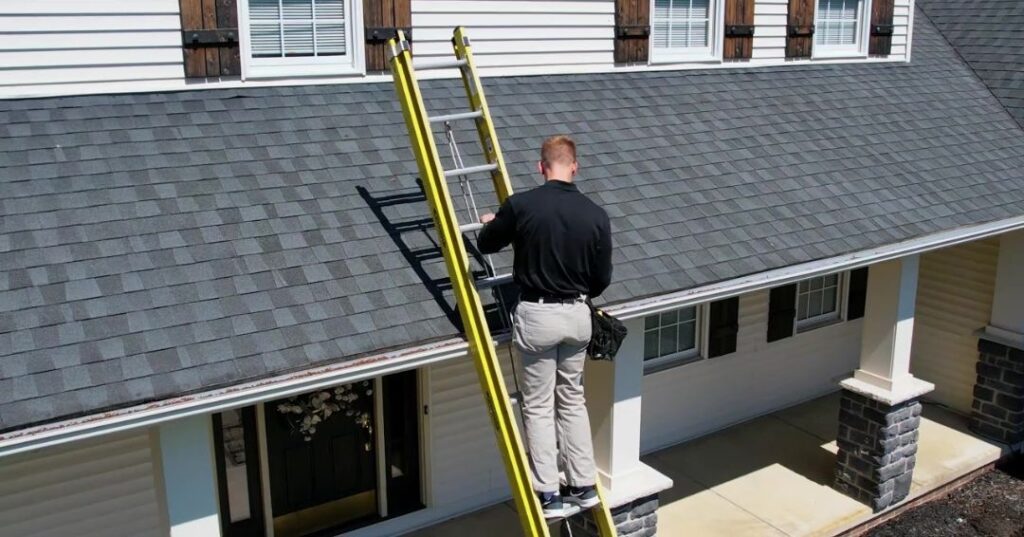
Brian eventually sold his stake in the body shop to a national collision repair chain in 2022 and went all in on Always Be Fair Roofing, which he had already started building in 2020. The claims advocacy skill he’d spent decades developing became the company’s core specialty.
Here’s what that looks like in practice. One homeowner’s claim opened at $1,600 from a national insurer. After Brian got involved, documented the actual damage, and pushed back on the initial scope, the payout reached $27,000. Another homeowner was originally offered just $400 above his deductible, on a claim that Brian argued should cover far more. Five months later, after Brian kept advocating through the process, that homeowner received a $54,000 settlement covering a full roof, new siding, and interior repairs.
“An insurance company will never pay a dime that they do not owe,” Brian says. That’s not a criticism. It’s the reason he tells homeowners not to accept the first number they’re offered, and why he stands beside them through the adjuster meeting instead of just showing up after the check clears.
That advocacy isn’t always profitable in the short term. Brian’s son, who now works alongside him, has pointed out that some jobs barely clear a small profit after all the time invested. Brian’s answer hasn’t changed: “If I don’t do it, no one will.”
What Brian’s Story Means for You as a Homeowner
Brian’s own advice for vetting a contractor comes directly from watching bad ones operate for over a decade. A few of his rules are worth borrowing before you hire anyone for roof, siding, or storm damage work:
- Don’t judge a contractor by who quotes the fastest. The company that can get someone to your driveway within hours is often the one with the least experienced sales staff and the most pressure to close, the exact profile of a storm chaser.
- Check public records, not just online reviews. Search local court records for lawsuits or bankruptcies tied to the owner’s name before you sign anything.
- Ask about Chamber of Commerce membership. A contractor with real local roots has a reputation to protect in the community, not just online.
- Be wary of anyone asking for payment in cash up front. Legitimate, established contractors don’t need to rush you into paying before work begins.
- Understand the difference between a manufacturer’s warranty and a workmanship warranty. The shingle package might come with a warranty, but that doesn’t cover the crew’s installation work unless the contractor backs it separately.
Brian’s rules come straight from the jobs and partnerships that taught him why they matter, not a generic checklist. And if you’re heading into an insurance claim of your own, it’s worth reading why your roofer should be at the adjuster meeting before that appointment gets scheduled.
FAQ
How do I know if a roofing contractor will actually advocate for me during an insurance claim?
Ask how the contractor works with insurance agents and adjusters before a storm ever hits, not just after. A contractor who has built long-term relationships with local agents, and who is willing to tell you honestly whether your damage is claim-worthy, is more likely to advocate for a fair settlement than one who only shows up chasing a quick sale.
What should I check besides online reviews before hiring a roofer in Ohio?
Check public court records for lawsuits or bankruptcies connected to the business or its owner, and ask whether the company is active in your local Chamber of Commerce. Online reviews and Better Business Bureau ratings are useful, but they’re easy to game and don’t show you how long a company has actually been operating.
Can I dispute my insurance company’s claim assessment in Ohio?
Yes. Ohio homeowners have the right to challenge an adjuster’s assessment and request an independent appraisal if you believe your claim was undervalued. The Ohio Department of Insurance’s homeowners guide outlines this appraisal and dispute process in detail, including how to file a complaint if needed.
What’s the difference between a workmanship warranty and a manufacturer warranty?
A manufacturer’s warranty covers defects in the shingles or materials themselves, not mistakes made during installation. A workmanship warranty, offered directly by the contractor, covers the quality of the installation itself. Always ask which warranty applies to which part of the job before signing a contract.
Watch the Full Interview
Brian told this story in more detail on the Today’s Business Leaders podcast, hosted by Gabe Arnold of Business Marketing Engine. If you’d rather hear it directly from him, the full conversation is below.
See It For Yourself
Brian Roach didn’t set out to build a roofing company. He spent three decades finding out, job after job and partnership after partnership, exactly what happens when a business isn’t built on fairness, then built one that was. That’s the story behind the $345 roof tune-up, the claims that turned into fair settlements instead of lowball offers, and the name on the truck.
If you’re facing storm damage, a questionable insurance offer, or just want an honest opinion on your roof before you commit to anything, schedule a free “Eyes On” inspection with Always Be Fair Roofing at (330) 818-0203. See for yourself how the philosophy behind the name plays out on your own roof.